Opening a Bank Account in Spain as a Foreigner: What It’s Really Like
Opening a bank account in Spain sounds like one of those practical things you’ll do between unpacking boxes and finding your favourite café.
In reality, for many foreigners, it becomes the first true lesson in how Spain works.
I still remember my first attempt. I walked into a bank with confidence, passport in hand, convinced this would be quick. I left twenty minutes later with a polite smile, three brochures, a handwritten list of documents I didn’t yet have, and the quiet realisation that Spanish bureaucracy doesn’t respond well to optimism alone.
If you’re feeling confused, overwhelmed, or unsure where to even begin — you’re not behind. You’re just at the beginning.
This guide walks you through opening a bank account in Spain as a foreigner, with real context, real expectations, and the small but crucial details banks rarely explain.
Why You’ll Need a Spanish Bank Account Sooner Than You Think
At first, many people rely on their home-country account or an international card. It works… until it doesn’t.
The moment you try to rent an apartment, sign up for internet, get paid by a Spanish employer, register as autónomo, or even pay certain government fees, a Spanish bank account stops being optional.
This is especially true once you start dealing with paperwork covered in blog articles like NIE Explained, Padrón Explained, The NIE + Padrón Step-by-Step Toolkit or Renting an Apartment in Spain. Spain’s systems are deeply interconnected, and banking sits right at the centre of them.
A local account isn’t just about money — it’s about access.
The Two Types of Bank Accounts Foreigners Are Offered (And Why This Confuses Everyone)
One of the biggest misunderstandings comes from the fact that Spain has two different banking pathways for foreigners, depending on your residency status.
If you’ve just arrived and don’t yet have residency, most banks will offer you a non-resident account. These accounts are legal, common, and often the only option at first. They also come with higher fees and additional paperwork, usually including a non-resident certificate.
Banks rarely explain that this is temporary. Many newcomers assume they’ve chosen the “wrong” account, when in reality, they’ve chosen the only one available at that moment.
Once you become resident — often after securing your NIE and registering on the padrón — you can switch to a resident account. These are cheaper, easier to manage, and designed for everyday life in Spain.
This is why sorting your paperwork in the right order matters so much, something I talk about extensively in The First 90 Days After Moving to Spain.
Documents: Why Every Bank Tells You Something Different
People often ask for a definitive list of documents. The honest answer is: it depends.
Banks in Spain operate with a surprising amount of discretion. Requirements can change depending on the branch, the city, and even the employee you speak to.
That said, most banks will ask for some combination of your passport, your NIE or proof that you’ve applied for one, proof of address, and proof of income. If you’re opening a non-resident account, you may also be asked for a non-resident certificate issued by the police.
Sometimes a padrón certificate is requested. Sometimes it isn’t. This inconsistency is frustrating, but it’s also normal — and it’s why trying another branch can suddenly change everything.
This unpredictability is also why many people choose to open a temporary account early, even before everything is “perfect,” just to get their foot in the system.
Traditional Spanish Banks: Familiar Names, Very Spanish Systems
Walking into a Spanish bank feels formal in a way many foreigners aren’t used to. There’s paperwork, waiting, and a strong sense that time moves differently inside those walls.
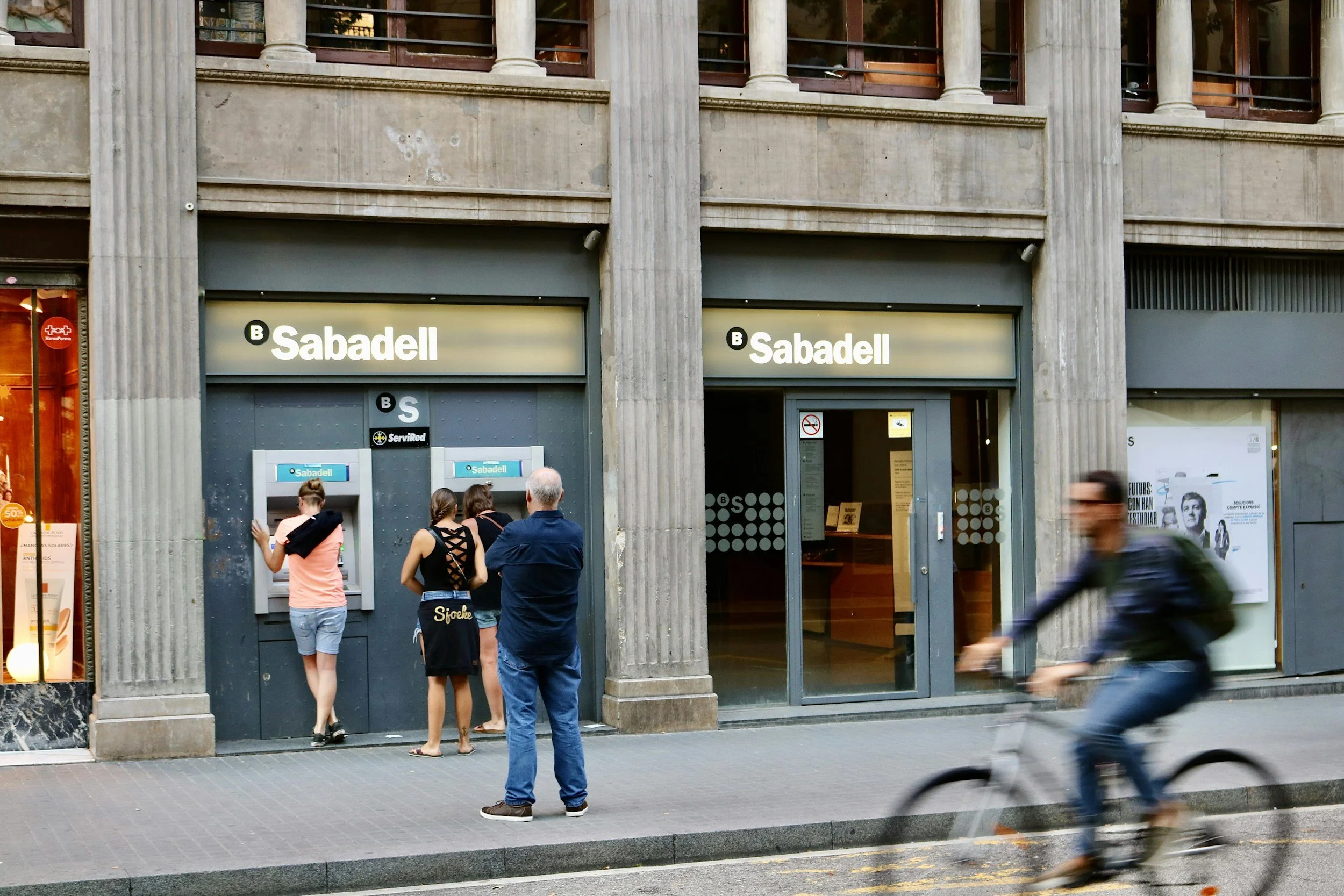
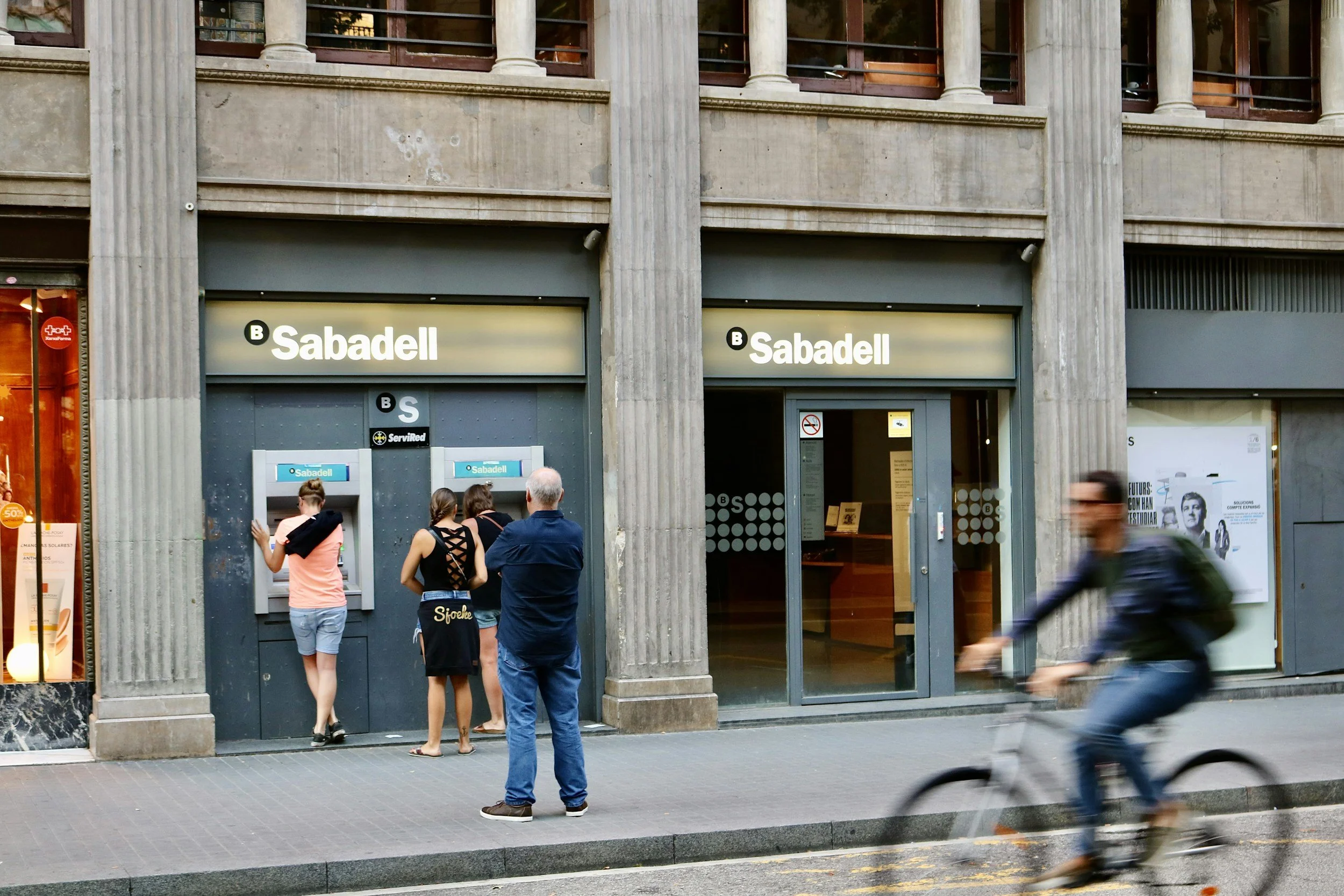
Banks like CaixaBank, Santander, BBVA, and Sabadell are commonly used by foreigners, especially in expat-heavy areas. Some branches offer English-speaking staff, while others don’t. Some are incredibly helpful. Others… less so.
What matters more than the brand is the branch itself. The same bank can give wildly different experiences depending on location.
This is where patience and preparation help — and where reading contracts carefully becomes essential, something I go into deeply in my Rental Contracts in Spain Guide.
Online Banks: Where Many Foreigners Finally Breathe
For many newcomers, online banks are where banking finally starts to feel manageable.
Wise, N26, and Revolut are especially popular because they offer English interfaces, quick setup, and far fewer in-person appointments. Wise, in particular, is often used as a first step because it provides a Spanish IBAN without requiring full residency.
Online banks don’t replace everything — some official payments and government processes still prefer traditional banks — but they’re an excellent foundation.
Many people eventually use a combination: an online bank for daily life and a traditional Spanish bank for administrative matters.
How Opening a Bank Account Usually Happens (In Real Life)
The process rarely unfolds in a straight line.
You choose a bank. You gather documents. You book an appointment. You wait. You’re asked questions. You sign forms. You’re told to come back. Or wait for an email. Or bring one more document.
Sometimes the account opens instantly. Sometimes it takes days or weeks. Sometimes you’re told no — only to succeed easily at another branch.
This isn’t you failing. This is Spain.
Understanding that earlier makes the process far less stressful.
The Small Mistakes That Make Everything Harder
Most banking frustrations don’t come from eligibility — they come from timing and expectations.
Waiting until you urgently need an account creates pressure. Not asking about fees leads to unpleasant surprises. Assuming rules are universal leads to unnecessary disappointment.
Opening a bank account early, even a temporary one, gives you flexibility later — especially when combined with guidance from articles like Common Visa Mistakes That Cause Rejections or Apartment Scams to Avoid.
Fees, Conditions, and Why You Should Always Ask Twice
Spanish banks are not shy about fees — but they’re also not always upfront about them.
Monthly maintenance fees, card fees, minimum income requirements, and conditions to keep an account “free” vary wildly. What sounds like a great offer can quietly become expensive if you don’t meet specific criteria.
This is why reading contracts matters. And why understanding what’s normal — versus what’s a red flag — can save you money and stress.
The Quiet Truth: This Is a Milestone
Your first Spanish bank account isn’t just a practical step. It’s symbolic.
It’s one of the moments where Spain shifts from feeling like a project to feeling like a place you belong. Once it’s done, everything else feels slightly easier — utilities, rent, taxes, healthcare, work.
And one day, you’ll open your banking app, see your Spanish IBAN, and realise you’re no longer “setting up.”
You’re living here.
Final Thoughts: You’re Not Doing This Wrong
If opening a bank account in Spain feels harder than expected, that doesn’t mean you’re unprepared.
It means you’re navigating a system that values process, patience, and paperwork — in that order.
Take your time. Try different banks. Ask questions. And trust that, like everything else in Spain, it eventually falls into place — often right when you stop forcing it.
And when it does, you’ll think:
Okay. This finally feels real.
Frequently Asked Questions About Opening a Bank Account in Spain
-
Yes, foreigners can open a bank account in Spain even if they are not residents. Most Spanish banks offer non-resident bank accounts for people who do not yet have residency. These accounts usually come with higher fees and additional documentation requirements.
-
A NIE is not legally required to open a non-resident bank account, but many banks request one in practice. For resident accounts, a NIE is almost always required. Having a NIE makes the process faster and gives access to cheaper account options.
-
Banks typically ask for a valid passport, proof of address, and proof of income or employment. Non-resident accounts may also require a non-resident certificate. Requirements vary depending on the bank and branch, so it’s common to be asked for additional documents.
-
Yes, non-residents can open a bank account in Spain. These accounts are designed for foreigners who have not yet obtained residency and are commonly used by people who have just moved or are in the process of applying for legal documents.
-
Spanish bank accounts can have monthly maintenance fees, especially non-resident accounts. Some resident accounts are free if certain conditions are met, such as receiving a salary or maintaining a minimum balance. Always ask about fees before signing.
-
Online banks can be used for daily expenses and often provide a Spanish IBAN. However, some official payments and administrative processes still require a traditional Spanish bank account. Many foreigners use both.













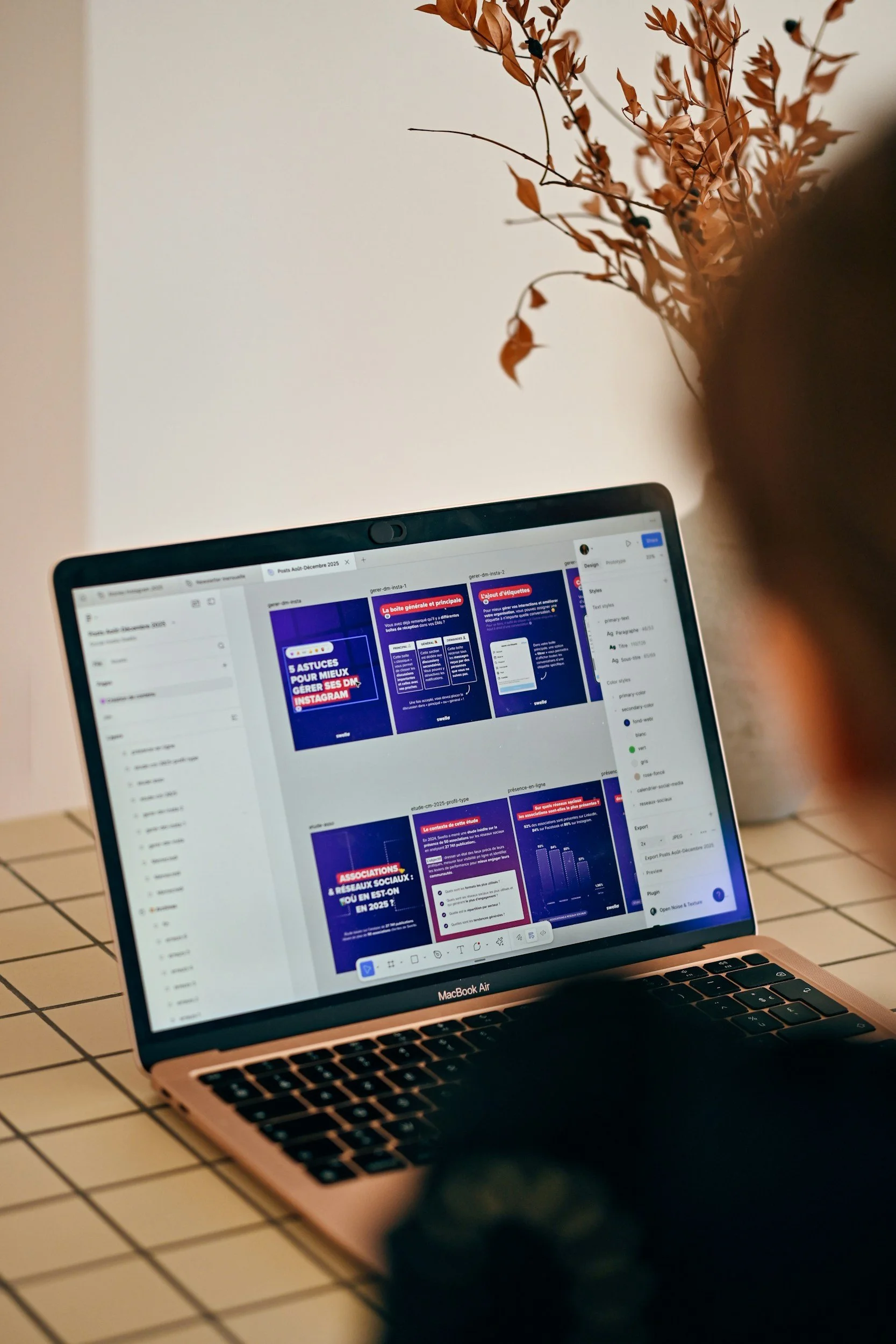















Renting a home in Spain can feel overwhelming, especially if you are unfamiliar with the legal system, the language, and the way rental contracts are structured. Many foreigners sign contracts they do not fully understand, rely on verbal promises that are never written down, or later discover that their contract does not offer the protection they expected.
This guide was created to give you clarity before you sign anything.
The Complete Guide to Rental Contracts in Spain is a clear, practical e-guide designed to help you understand how Spanish rental contracts work before you sign anything. It explains the different types of rental contracts used in Spain, what your rights and obligations are as a tenant, and how to recognise potential problems early.
What This Guide Helps You Do
Helps you move from uncertainty to confidence when dealing with rental contracts in Spain. It supports you in:
Understanding what you are agreeing to before signing a contract
Identifying red flags and clauses that deserve closer attention
Choosing the correct contract type for your situation
Protecting your deposit and understanding your financial responsibilities
Communicating more confidently with landlords or agencies
Navigating your tenancy with fewer surprises and misunderstandings
Ready to Rent with Confidence?
Rental contracts do not have to be confusing or intimidating. With the right information, you can approach renting in Spain feeling informed, prepared, and in control.
If you want to understand your rental contract clearly, avoid common mistakes, and rent in Spain with confidence, this guide is designed to support you every step of the way.
👉 Download the The Complete Guide to Rental Contracts in Spain and come prepared for the Spanish housing market.